Enter your email to view this content
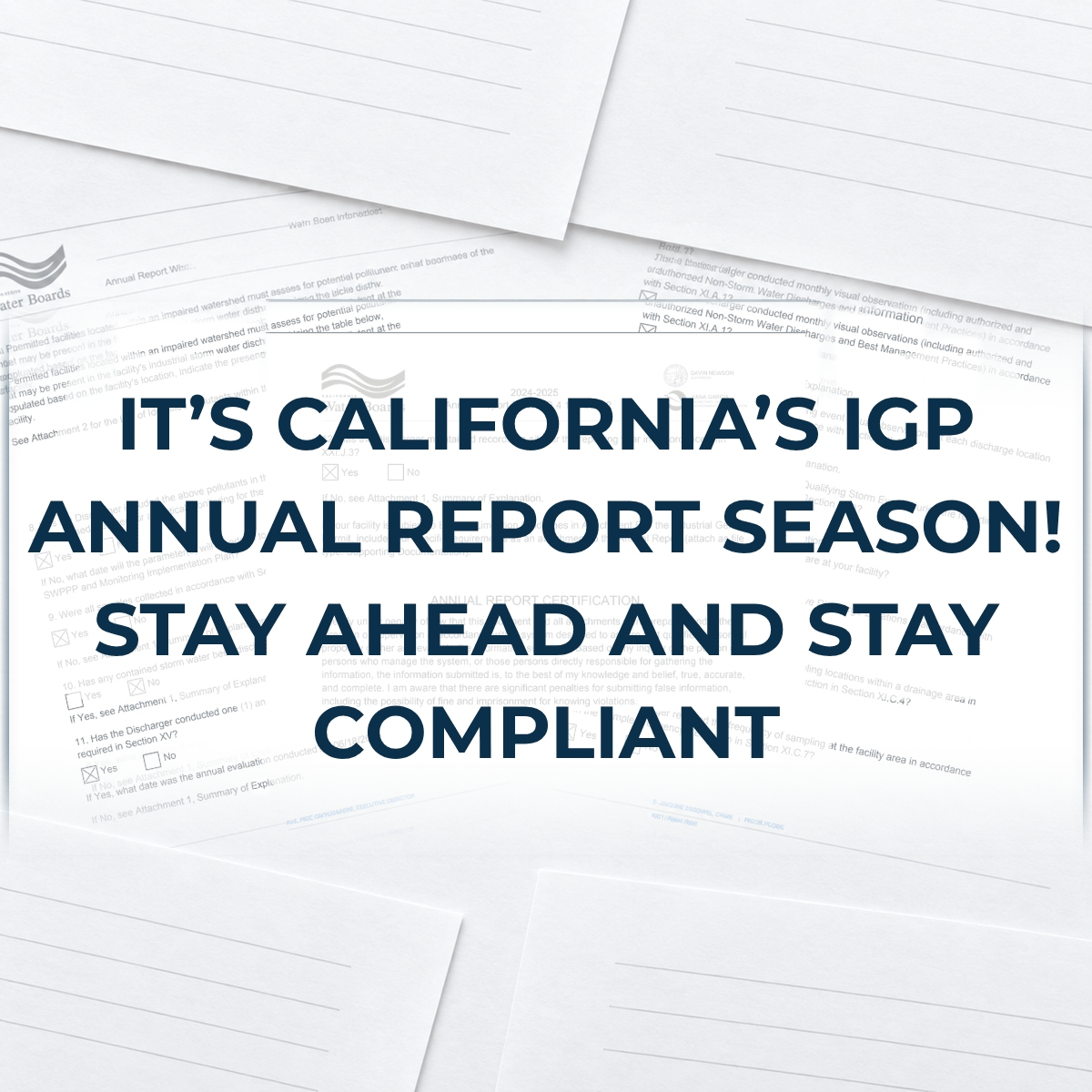
Every year, industrial facilities face the same challenge: the California Industrial General Permit (IGP) Annual Report. Submit it late, incomplete, or uncertified, and you can face notices of violation, fines, or mandatory follow-up monitoring. This isn’t just paperwork. It’s your facility’s record of compliance for the entire stormwater year.
Why You Can’t Afford to Wait
The annual report is due by July 15 for the previous stormwater year. Regulators use it to verify that your facility:
- Collected the required number of samples during the stormwater year
- Conducted all required inspections
- Maintained an up-to-date SWPPP
- Properly documented any corrective actions
Failing to certify the report or missing data triggersenforcement risk, potentially putting your facility under scrutiny and requiring additional sampling.
Tips for a Smooth Compliance Process
Staying on top of your annual report is easier when you spread the work throughout the year. Here’s how:
- Keep your records up-to-date: Enter monitoring results, inspections, and corrective actions as they happen. Don’t wait until year-end to check the data.
- Check your data regularly: Make sure each sample, log entry, and inspection is complete and accurate. Catch mistakes early before they become a problem.
- Use organized tools: For our clients, Frog Tracker centralizes monitoring and inspection data, making it easy to pull together a complete, submission-ready report.
- Review your SWPPP often: Make sure your plan matches current operations and any changes at the facility.
- Assign clear responsibilities: Decide who handles inspections, data entry, and report review, so nothing slips through the cracks.
You can also follow theIGP Annual Report Guidance PDF to ensure your annual report meets all regulatory requirements.
Common Pitfalls to Avoid
Even experienced teams sometimes run into trouble. The most common issues include:
- Missing or incomplete samples: Failing to collect or record the required number of stormwater samples.
- Inaccurate or inconsistent data: Typos, wrong units, or swapped values can cause questions from regulators.
- Unlogged corrective actions: If an issue occurs but isn’t recorded with dates and actions, it looks like it never happened.
- SWPPP discrepancies or missing signatures: Regulators want to see your plan matches operations and the report is certified.
How to avoid these pitfalls: Check your entries regularly, update your logs in real time, and review your SWPPP and reports well before the July 15 deadline. Doing a little work all year prevents big headaches later.
Make This Year Count
Annual report season doesn’t have to be stressful. By planning ahead, staying organized, and ensuring all required samples and certifications are completed, your facility can meet California IGP compliance confidently and efficiently.