Enter your email to view this content
Why Sampling Success Starts Before the Storm
For industrial facilities regulated under California’s Industrial General Permit (IGP), stormwater sampling can be one of the most stressful parts of compliance season. A single failed sample can trigger additional monitoring, Exceedance Response Actions (ERAs), and increased regulatory attention.
What many facilities don’t realize is that most sampling problems don’t happen because of lab error or bad luck. They happen because systems, BMPs, and site conditions weren’t fully prepared for real storm events.
Sampling success isn’t achieved on the day of collection, it’s built through proactive planning, performance optimization, and site readiness.
The Hidden Risk of Reactive Compliance
Many stormwater programs operate in reaction mode:
- BMPs are adjusted only after exceedances
- Maintenance increases only when problems appear
- Sampling preparation happens days before storms
- Treatment upgrades are considered after repeated failures
This approach often leads to inconsistent results, repeated benchmark exceedances, and unnecessary compliance stress.
Facilities that focus on readiness instead of reaction tend to experience more stable stormwater performance and fewer surprises during wet season.
Building a Sampling-Ready Stormwater Program
Step 1: Know Your High-Risk Pollutants
Every site has a unique stormwater profile. Reviewing historical sampling data helps identify which parameters consistently create challenges.
Common industrial pollutants include:
- Total Suspended Solids (TSS) from sediment tracking and exposed soils
- Metals such as copper and zinc from equipment wear and material storage
- Nutrients from fertilizers, organic debris, and wash water
- pH fluctuations from concrete work and chemical exposure
- Oil and grease from vehicle maintenance and fueling areas
Understanding your problem parameters allows you to prioritize controls where they will have the greatest impact.
Step 2: Evaluate BMP Performance, Not Just Installation
Having BMPs on site doesn’t guarantee they are working effectively.
Before sampling season begins, facilities should evaluate:
- Whether BMPs are positioned along actual flow paths
- If controls are properly sized for runoff volume
- Whether inlet protection devices are clogged or bypassing flow
- If sediment controls are nearing capacity
- Whether maintenance schedules are being followed consistently
Underperforming BMPs are one of the most common contributors to stormwater sampling failures.
Step 3: Address Flow Volume and Hydraulic Limitations
Stormwater challenges aren’t always about pollutant concentration. Often they are about volume and velocity.
High flow conditions can overwhelm BMPs, reduce settling time, and push pollutants through systems before treatment can occur.
Sites with large paved areas, steep slopes, or off-site run-on are especially vulnerable to hydraulic overload during major storm events.
Managing flow capacity is a critical component of sampling readiness.
Step 4: Identify When Treatment Systems Are Needed
Basic BMPs can be effective for many sites, but facilities experiencing repeated exceedances or operating under tighter discharge limits may require additional treatment support.
Engineered stormwater treatment systems offer:
- Predictable pollutant removal performance
- Controlled treatment under varying flow conditions
- Reduced dependence on temporary BMPs
- Improved sampling consistency
- Long-term compliance stability
Frog Environmental’s StormPROOF® treatment systems, including the StormPROOF® 75 GPM system, are designed to support industrial facilities dealing with sediment, metals, nutrients, and hydrocarbon loading while maintaining operational efficiency.
Step 5: Prepare Sampling Infrastructure in Advance
Sampling readiness is more than just water quality it’s operational preparation.
Facilities should confirm:
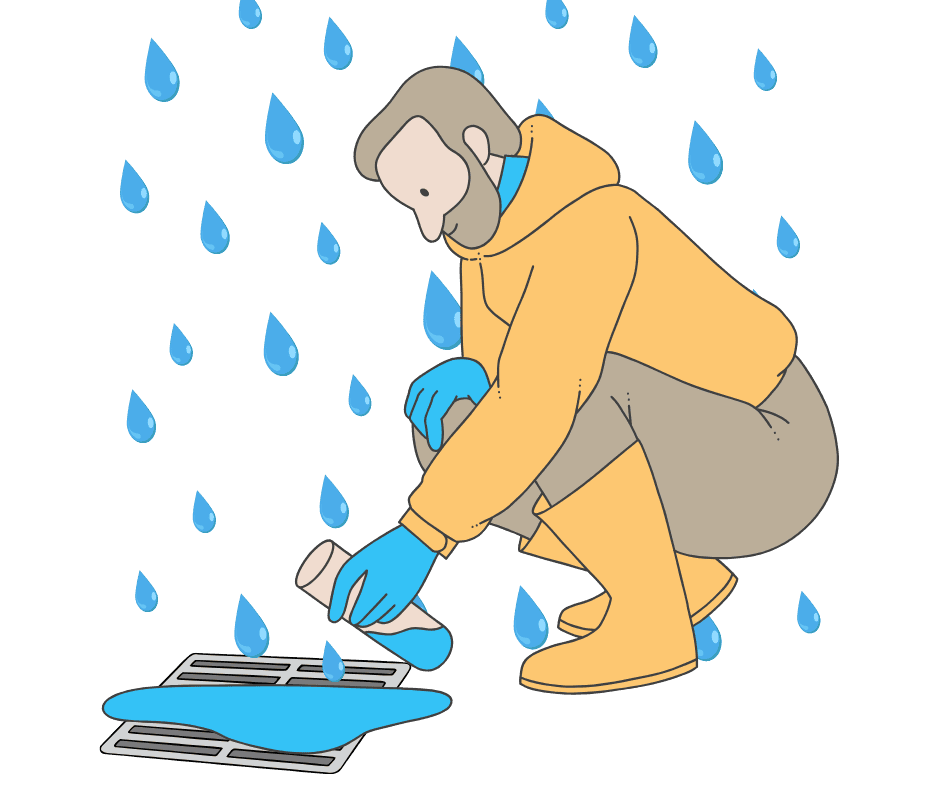
- Sampling locations are accessible and safe
- Outfalls are clearly identified and labeled
- Equipment is calibrated and functioning properly
- Sampling supplies are stocked and ready
- Staff understand timing requirements and procedures
Poor preparation can lead to missed qualifying storm events or compromised data quality.
Step 6: Integrate Treatment Optimization With BMP Strategy
Strong stormwater programs rely on layered protection:
- Source control BMPs
- Flow management practices
- Treatment systems
- Routine inspections and maintenance
- Data tracking and performance review
This integrated approach improves system resilience and helps maintain consistent compliance even during large or consecutive storm events.
With Frog Environmental’s merger with Clearwater Services, clients now have access to expanded treatment expertise, system optimization support, and advanced water quality technologies, which allows facilities to scale stormwater solutions as site conditions evolve.
Step 7: Keep Documentation Aligned With Field Conditions
A common compliance issue occurs when SWPPP documentation does not reflect real-world site conditions.
Facilities should ensure that:
- BMP maps match current site layouts
- Drainage patterns are accurately documented
- Treatment systems are properly recorded
- Maintenance procedures are updated
- Inspection protocols reflect actual operations
Accurate documentation strengthens compliance defensibility and reduces audit risk.
Sampling Readiness Checklist
Before storm season begins, facilities should:
- Review historical sampling trends
- Inspect BMP condition and placement
- Evaluate flow capacity and run-on impacts
- Confirm treatment performance capability
- Prepare sampling equipment and supplies
- Update SWPPP documentation
- Train responsible staff
Proactive preparation helps eliminate last-minute scrambling and improves sampling reliability.
Building Long-Term Stormwater Performance
Stormwater compliance success is built long before rain falls. By focusing on readiness, performance optimization, and proactive planning, industrial facilities can reduce exceedances, improve sampling outcomes, and strengthen long-term compliance stability.
Preparing today helps protect your results tomorrow.
Get Your Site Ready for Sampling Season
Our stormwater specialists can help evaluate BMP performance, flow capacity, and treatment options to improve sampling reliability before the next storm event. Book a free consultation today, and let's get your facility set up for success.